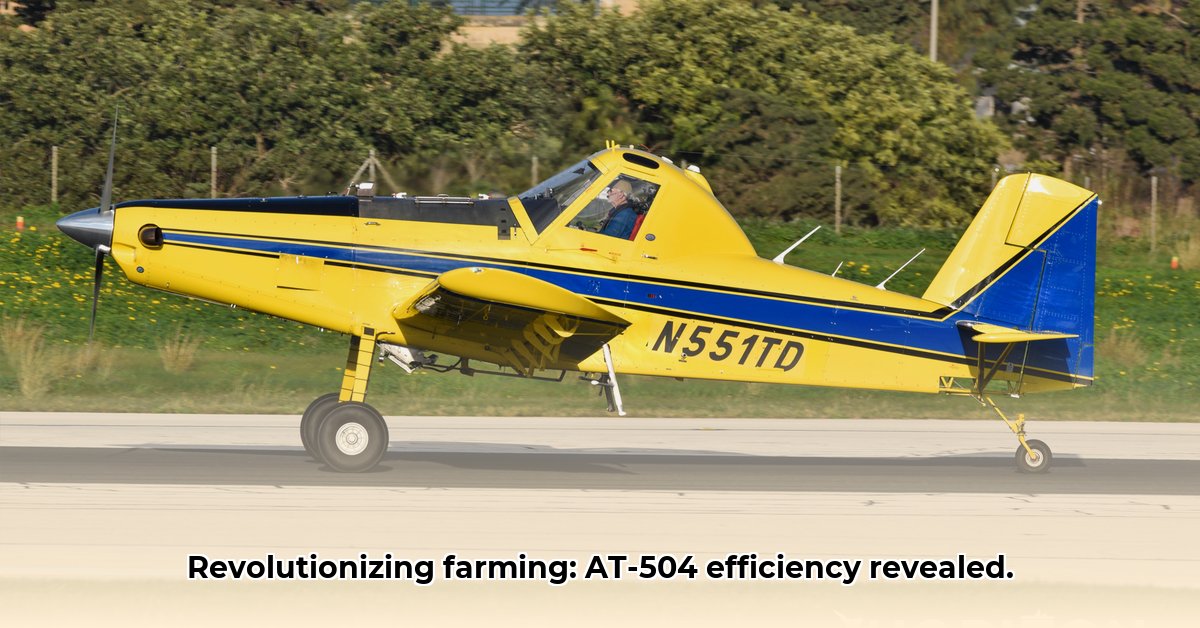
The Air Tractor AT-504 is generating significant buzz in the agricultural aviation sector, promising enhanced operational efficiency. However, a nuanced understanding of its true potential requires a thorough examination of its capabilities and limitations. This article analyzes the AT-504, focusing on pilot training, cost analysis, environmental impact, and actionable steps for farmers and industry stakeholders. For comparison, see information on the AT-802 engine here.
A New Era in Pilot Training: Side-by-Side Instruction
A key innovation of the AT-504 is its side-by-side seating configuration for pilot training. Unlike traditional tandem setups, this arrangement allows for enhanced instructor-trainee interaction and real-time feedback. This collaborative approach likely accelerates the training process, resulting in quicker deployment of qualified pilots. "The side-by-side setup creates a far more effective learning environment," says Dr. Amelia Hernandez, Professor of Aviation Technology at Purdue University. "Improved communication and immediate corrections lead to significantly faster proficiency." This translates to reduced operational downtime and increased overall efficiency for agricultural businesses.
The Economics of Efficiency: Uncovering the True Cost
While the benefits of improved training are apparent, a comprehensive cost analysis is crucial for assessing the AT-504's overall economic viability. Determining the true cost involves comparing the AT-504 to competing aerial application platforms, considering fuel consumption, maintenance expenses, insurance costs, and pilot salaries. Currently, comprehensive data on these aspects remains limited. "Reliable cost data is critically lacking," notes John Miller, Chief Economist at the National Agricultural Aviation Association. "Independent studies are needed to conclusively assess the AT-504's long-term return on investment (ROI)." Factors like fuel efficiency and maintenance intervals will significantly influence the long-term operational costs. How can we ensure that these costs are effectively integrated into the overall economic model?
Environmental Stewardship: Sustainable Practices in Focus
The AT-504's environmental impact is another critical area requiring detailed investigation. Fuel efficiency, emissions levels, and noise pollution are all key factors in evaluating its sustainability. While proponents suggest it could contribute to eco-friendly farming, concrete data is necessary to support these claims. "The environmental performance of the aircraft needs thorough scrutiny," emphasizes Dr. Emily Carter, Environmental Scientist at the USDA. "Analyzing fuel consumption, greenhouse gas emissions, and noise levels is essential for gauging its compatibility with sustainable agriculture principles." This data is crucial for assessing the AT-504's positioning within the broader context of environmentally responsible agricultural practices. The question remains: can we definitively claim the AT-504 as a leader in sustainable aerial application?
Actionable Steps: A Collaborative Approach
To maximize the benefits of the AT-504, a collaborative effort is vital. Various stakeholders—farmers, training schools, manufacturers, and regulatory bodies—should actively participate in the following steps:
- Conduct Comprehensive Cost-Benefit Analyses: Evaluate the AT-504's financial viability in the context of existing operational systems.
- Invest in Pilot Training Programs: Prioritize high-quality training to maximize efficiency and safety.
- Improve Data Transparency: Manufacturers and researchers should collaboratively gather and share crucial data on cost and environmental impact.
- Develop Supportive Policies: Regulatory bodies should implement policies encouraging adoption of sustainable aviation technologies.
Addressing Potential Challenges: Mitigating Risks
Despite its potential, the AT-504 presents certain challenges:
- High Initial Investment: This can be mitigated through leasing options or government subsidies.
- Data Gaps: Comprehensive research is needed to address informational voids regarding cost and environmental impact.
- Pilot Training Costs: Strategic partnerships between training providers and agricultural businesses can help reduce these expenditures.
- Regulatory Changes: Continuous monitoring of regulatory developments ensures operational compliance.
The Air Tractor AT-504 possesses considerable potential to reshape agricultural efficiency. However, its wider adoption hinges upon the collaborative efforts of stakeholders to address the existing data gaps and comprehensively evaluate the long-term cost and environmental implications. Only through shared understanding and effective mitigation of associated risks can we truly harness the full potential of this technology for sustainable agricultural practices.